Halloween T Shirt: I'm Just Here For The Boos Review
As an embroidery digitizer and product reviewer, I approach every new seasonal graphic with a healthy dose of skepticism. We have all downloaded files that look perfect on screen but turn into thread nests or distorted lettering once the needle hits the fabric. When evaluating the Halloween T Shirt, I m Just Here Boos design for real-world production, my primary concern is not just the pun—it is how this illustration translates from a digital graphic into a tangible, sellable handmade product. This review breaks down the practical realities of using this specific artwork for your craft business, focusing on stitch integrity, commercial viability, and customer appeal.
First Impressions: Visual Mood and Layout Balance
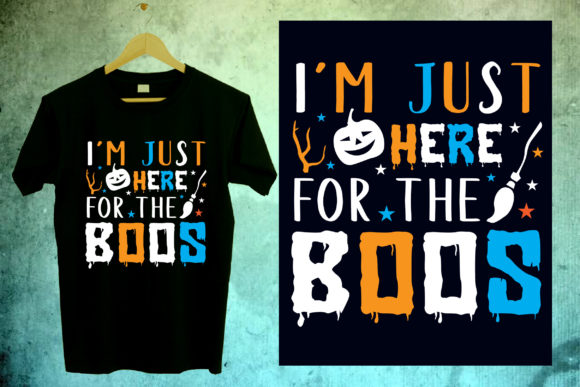
The immediate strength of the Halloween T Shirt, I m Just Here Boos concept lies in its relatable humor and balanced composition. From a designer’s perspective, the layout feels intentional rather than cluttered. The typography interacts well with the illustrative elements, creating a focal point that reads clearly from a distance. This is crucial for custom apparel and tote bag design, where visual impact must be instant. The mood strikes a balance between spooky and playful, making it versatile enough for adult party wear, teen fashion, or even family-friendly holiday merchandise without feeling too juvenile or overly aggressive.
However, as a machine embroidery design, the success depends entirely on how these graphical elements are interpreted into stitches. The clean lines suggest it could work beautifully as an applique design if you want to reduce stitch count and add texture, or as a full-fill motif for a more traditional embroidered look. The spacing between the text "Boos" and any accompanying ghost or bottle graphics appears adequate to prevent registration issues, which is often the downfall of complex novelty designs.
Real-World Application: Stitching a Custom Sweatshirt
To truly test this asset, I mentally walked through producing a custom crewneck sweatshirt for a boutique client. Sweatshirts are high-value items for Etsy sellers and small shops during the fall season. In this scenario, the Halloween T Shirt, I m Just Here Boos graphic serves as the centerpiece. Because fleece and French terry fabrics have significant stretch and texture, the design needs robust underlay to prevent sinking.
If utilizing a satin stitch for the lettering, I would verify that the column width is sufficient to cover the fabric weave without becoming so wide that it risks snagging. For the illustrative portions, a fill stitch with appropriate pull compensation is non-negotiable on knit garments. Without it, the "ghost" or decorative elements could distort, making the finished product look amateurish. Conversely, if applying this to a woven canvas tote bag, the stability increases, allowing for finer details and tighter running stitch outlines. This versatility makes the file a strong contender for multi-product listings, provided you adjust your stabilizer strategy based on the substrate.
Expanding Beyond Apparel: Mugs, Pillows, and Patches
The product description mentions suitability for pillows, mugs, and stickers. As an embroiderer, I see distinct opportunities here. An embroidered patch version of this design could be a fantastic add-on product. Patches require dense satin borders and tight fill density to hold their shape when removed from the hoop. The bold nature of "I'm Just Here For The Boos" lends itself perfectly to this format. Similarly, for holiday embroidery on pillow covers, the design offers a festive accent that doesn't overwhelm the home decor aesthetic. Just remember that while the source file might be categorized under Print Templates or Graphics, verifying the existence of a dedicated digital embroidery file format (like PES, DST, or JEF) is essential before attempting these specialized applications.
Critical Considerations: Where to Proceed with Caution
No design is universal, and the Halloween T Shirt, I m Just Here Boos requires careful handling in specific contexts. Small hoop size adaptations are the most common failure point. If you attempt to shrink this design down for a baby onesie or a cap, the internal details of the lettering may merge. Always check the minimum recommended size; resizing below 80% often compromises stitch clarity.
Fabric choice also dictates success. On highly textured fabrics like terry cloth or faux fur, fine details will disappear. You may need to use a water-soluble topping or simplify the design to bolder shapes. Additionally, be wary of dark fabrics. If the design relies on subtle shading or light-colored threads, contrast is key. Test on scrap fabric first. A design that pops on white cotton might vanish on black polyester unless you increase thread colors brightness or add a white underlay base. For baby embroidery, ensure the back of the design is smooth; excessive jump stitches or dense areas can irritate sensitive skin, requiring a fusible backing after stitching.
Commercial Value and Customer Trust
For small shop products and Etsy sellers, professional presentation drives sales. Using a well-digitized version of Halloween T Shirt, I m Just Here Boos signals quality to buyers. Customers can distinguish between a flat, poorly registered print-like embroidery and a dimensional, professionally executed stitch-out. High-quality execution justifies higher price points and builds brand consistency.
Furthermore, consider the licensing. Before listing any finished product or selling the design assets themselves, confirm the commercial usage rights. Does the license allow for mass production, or is it limited to small-batch handmade sales? Clarifying this protects your business. Also, utilize printable mockup tools to showcase the design on various products before committing to physical samples. This allows you to gauge market interest and test different colorways digitally, saving time and materials.
Designer Notes for Successful Execution
Before loading this file into your machine, adhere to these practical checkpoints to ensure your embroidery project succeeds:
- Verify File Integrity: Confirm the embroidery file matches your machine's format and has not been corrupted during transfer. Check the stitch count and dimensions against your hoop capabilities.
- Test Stitch-Out: Never run a final product without a test on similar scrap fabric. Inspect for gaps, puckering, or thread breaks.
- Stabilizer Selection: Match the stabilizer to the fabric weight. Use cut-away for knits and tear-away for stable wovens. Consider adhesive sprays for difficult hooping.
- Thread Contrast: Evaluate visibility. Ensure the "Boos" text stands out against the garment color. Adjust thread palette if necessary for better readability.
- Detail Inspection: Zoom in on the digital file to check for overlapping stitches or unnecessary trims that could slow production or affect finish quality.
- Licensing Check: Re-read the terms of use specifically for commercial embroidery to avoid legal issues when scaling your shop.
- Mockup Validation: Create realistic previews showing the design on actual garments to set accurate customer expectations regarding size and placement.
Ultimately, the Halloween T Shirt, I m Just Here Boos represents a solid opportunity for seasonal inventory, provided it is treated with technical respect. By understanding the interplay between the graphic style and embroidery mechanics, you can transform a simple digital template into a premium personalized gift or best-selling retail item. Success in this niche comes not just from having cute designs, but from executing them with the precision that defines professional craftsmanship.